


Last Updated: November 5, 2026
Quick Summary
Quality fabric is judged by feel, weight, construction and performance, not just the fiber label. Check for a smooth, even hand feel, substantial weight with good stretch recovery, and minimal pilling when rubbed. Then confirm the seams are firm and the stitching is tight and consistent.
- A fiber label shows what a fabric is made of, not how well it was made.
- Stretch the fabric and hold for five counts; good knit returns to shape within seconds.
- Rub a small patch 20 to 30 times; pilling there suggests it will pill in the wash.
- Hold fabric to a window; a dense knit should block most light.
- Keep the receipt until you have washed the item once, since poor dye or finish can fail after laundering.
Table of Contents
- Why Fabric Quality Matters More Than the Label Suggests
- How to Spot Quality Fabric by Hand
- How to Spot Quality Fabric at Home With Simple Tests
- Reading Fiber Content, Weave and Knit Structure
- Fabric Quality Chart: What Good and Poor Fabric Looks Like
- Checking Seams, Stitching and Finishing Details
- Judging Fabric Quality When You Shop Online
- Frequently Asked Questions
Quality fabric is hard to judge from a product photo, and the label rarely tells the whole story. Happy Girl Edit & Co. builds its matching sets from premium 80/20 cotton-blend fabric, and a fabric's real quality shows up in how it feels, how it's built and how it holds up after washing.
Here's the core idea: a fiber name tells you what the fabric is made of, but not how well it was made. Two shirts can both say "100% cotton" and still feel and wear completely differently.
Why Fabric Quality Matters More Than the Label Suggests
A label lists fiber content. It does not tell you the yarn thickness, how tightly the knit is built, or how the garment was finished. That's where quality lives.
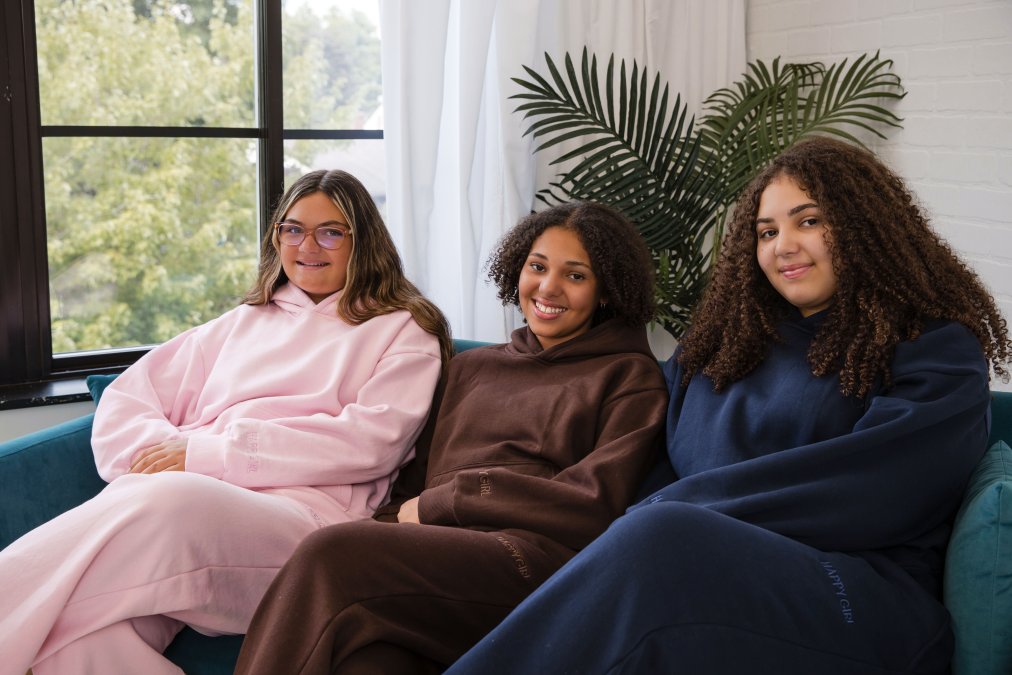
A dense, well-spun knit feels substantial and keeps its shape. A loose or thin knit may look the same in a photo but sag at the elbows and show light through the fabric.
Here's what to keep in mind:
- Fiber content sets the baseline. Cotton breathes, polyester resists stretching out, and blends try to get the best of both.
- Construction changes the result. Yarn twist, knit density and finishing decide how the fabric actually performs.
- Quality shows up over time. Good fabric resists pilling, keeps its color and recovers its shape after wear.
How to Spot Quality Fabric by Hand
Your hands are the best tool you have in a store. Pick up the garment, close your eyes for a moment and focus on what you feel.
Feel, Softness and Hand Feel
"Hand feel" is the industry term for how a fabric feels when you touch it. Quality fabric usually feels:
- Smooth but not slick. It shouldn't feel rough, scratchy or coated.
- Even across the surface. Rub a small area with your thumb. If you feel bumps or thin spots, the yarn is likely uneven.
- Soft right away. Softness from a good fiber and finish is consistent. Harsh stiffness often hides cheap fillers or heavy chemical treatments.
Pay attention to the inside of the fabric too. The back should feel nearly as smooth as the front. A rough inside is often a sign of low-grade yarn.
Weight, Thickness and Density
Weight is one of the fastest quality checks you can make:
- Hold the garment flat and gently stretch it. Can you see light through it? Thin, see-through fabric usually means low density.
- Compare two similar pieces side by side. The heavier one often has more yarn packed into each square inch.
- Fold a sleeve or hem. Quality fabric springs back. Weak fabric stays creased.
Heavier doesn't always mean better, though. A stiff, heavy fabric can be just as poor as a flimsy one. You want substance with give.
How to Spot Quality Fabric at Home With Simple Tests
You can check a lot before the tags come off, or right after you get a new piece home. The key is to make each test repeatable and to know what a pass looks like.
- The stretch-and-recovery test: Stretch the fabric gently in both directions and hold for a count of five, then let go. Good knit fabric returns to its original shape within a few seconds. If it stays stretched or looks wavy, the knit may be weak.
- The light test: Hold the fabric up to a window or a lamp. Thin, uneven spots show up clearly. Look for gaps between the threads. A dense knit should block most light; if you can read text through it, the fabric is low density and likely to wear thin.
- The rub test for pilling: Rub a small patch of the fabric against itself 20 to 30 times with moderate pressure. Tiny balls of fiber forming on the surface point to short or weak fibers. A fabric that pills after 20 rubs will likely pill in the wash.
- The seam pull: Gently tug along a seam in both directions. The stitches should hold without puckering or popping. If you can see gaps open between stitches, the seam allowance or stitch density is too low.
What you can and cannot learn before washing
These tests tell you a lot about density, recovery, and fiber integrity, but they cannot fully predict shrinkage, colorfastness, or long-term pilling. Those show up after laundering.
Watch out: a fabric that passes every test in the store can still fail after washing if the dye or finish is poor. Keep the receipt until you have washed the item once.
Women's Fitted Embroidered Tee – Pink →
Reading Fiber Content, Weave and Knit Structure
The fiber content tells you the raw materials. The structure tells you how those materials were turned into cloth. You need both, because the same fiber can be spun and knit into a durable fabric or a flimsy one.
Read the label the way a buyer does
In the United States, the Federal Trade Commission requires fiber content to be listed by percentage on the care label, in descending order of weight. That means the first fiber named is the largest share. An 80/20 cotton-polyester blend should say so explicitly; if a label only says "cotton blend" without percentages, treat that as a warning sign. The FTC's labeling rules also require the country of origin and care instructions, so a missing or vague label is itself a quality signal.
Evaluate each fiber on its own terms
A single checklist misses the different qualities that matter for each fiber. Judge them separately:
- Cotton: Look for long-staple or combed cotton, which is spun from longer fibers and produces a smoother, stronger yarn with less pilling. Short-staple cotton feels rougher and fuzzes faster. Ring-spun cotton has a tighter, smoother twist than open-end cotton. A dense cotton jersey should feel substantial but still drape; if it feels papery or you can see light through it, the yarn is thin.
- Wool: Check for fineness (measured in microns, finer wool feels softer against skin) and for whether it is worsted (smooth, tightly spun) or woolen (loftier, fuzzier). Merino is finer than standard wool. Gently rub the surface; good wool resists felting and pilling better than loose, short-fiber wool.
- Linen: Linen is naturally stiff when new and softens with washing. Look for even, tight weave with few slubs (the thick, nubby spots). Some slubs are characteristic of linen, but too many mean inconsistent yarn. Hold it to the light, a loose linen weave will be see-through and prone to snagging.
- Silk: Look for a smooth, lustrous surface with an even hand. Rub the fabric between your fingers; good silk feels cool and slightly grippy, not slick or coated. Check the back for a similar finish to the front.
Judge the structure
- Knit vs. woven: Most loungewear is knit. Knits stretch and feel soft. Look for a tight, even pattern without gaps between loops. Wovens should have a dense, uniform weave with no visible gaps when held to light.
- Consistency: The loops or weave should look uniform across the whole garment. Irregular patterns often mean inconsistent machine tension.
- Yarn quality: Fine, evenly spun yarn gives a smoother surface. Coarse or uneven yarn shows up as fuzzy or lumpy texture.
Watch out: a high percentage of a good fiber does not guarantee quality. A 100% cotton shirt made from short-staple, loosely knit yarn will pill and thin faster than a well-built blend.
Fabric Quality Chart: What Good and Poor Fabric Looks Like
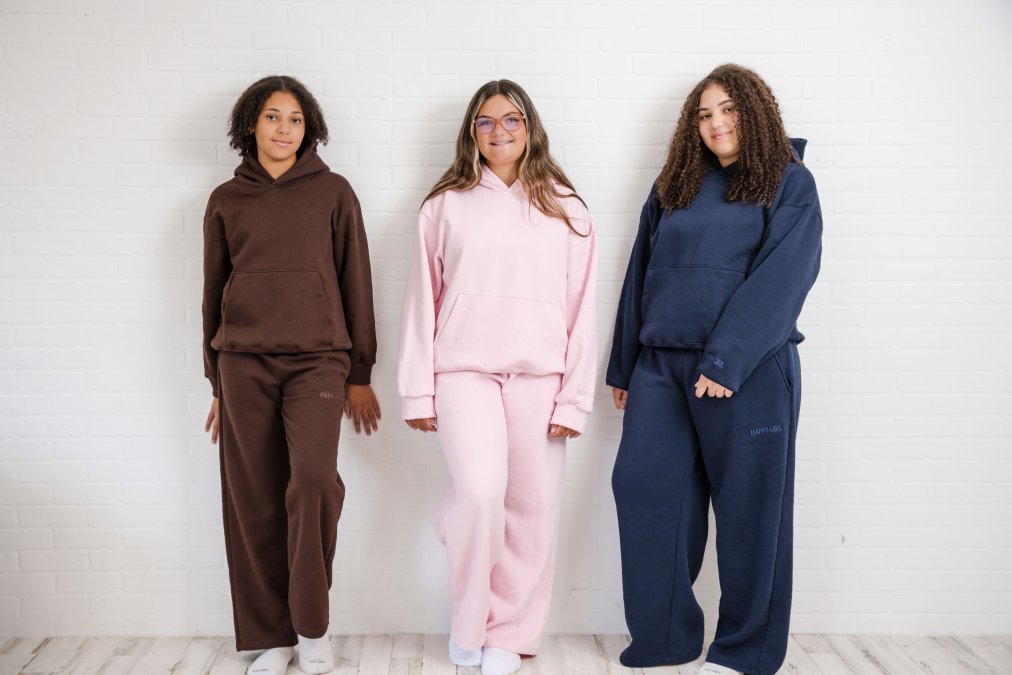
Use this quick reference when you're comparing pieces:
| Feature | Good Quality Signs | Poor Quality Signs |
|---|---|---|
| Feel | Smooth, soft, even | Rough, stiff, patchy |
| Weight | Substantial, with give | Flimsy or see-through |
| Stretch | Recovers quickly | Stays stretched or wavy |
| Surface | Even knit, no gaps | Loose loops, visible holes |
| Pilling | Minimal after rubbing | Fuzz balls form quickly |
| Seams | Straight, firm, flat | Puckering, loose stitches |
Use this chart as a guide, not a rule. A piece that scores well on most rows is usually a safe buy.
Checking Seams, Stitching and Finishing Details
Construction details often reveal more than the fabric itself. Look closely at:
- Stitch density: Tight, consistent stitches last longer. Gaps or wobbly lines are a warning sign.
- Seam placement: Seams should lie flat and sit straight along the body.
- Hems and cuffs: Clean, even edges with no fraying. Elastic should feel firm but comfortable.
- Finishing: Trim threads should be removed. Loose threads can unravel with wear.
Watch out: a beautiful fabric with weak stitching will still fail. Check both.
Judging Fabric Quality When You Shop Online
You can't touch a fabric on a screen, but you can still learn a lot.
- Read the fiber content and fabric weight listed on the product page. Compare the percentages across similar items.
- Look at close-up photos that show texture and stitching. Zoom in on the seams.
- Check the care instructions. Fabric that needs extra-gentle handling may not suit your routine.
- Read customer reviews for comments about pilling, shrinking and fit after washing.
Happy Girl Edit & Co.'s consumer fabric buying guide advice is useful for understanding how fiber labels must be stated. For our own pieces, you can start with the Women's Fitted Embroidered Tee - Pink to see a soft, fitted cotton knit up close, and compare how it feels against the heavier Pullover Hoodie Sweatpants Powder Pink set. The Off The Shoulder Sweatshirt Cream is another useful reference for judging seams and finishing.


Quality fabric is a combination of feel, structure, fiber and construction. Run through these checks every time, and you'll spot the good pieces faster and avoid the ones that won't last.
Frequently Asked Questions
How can you tell if a fabric is high quality?
Start with feel, weight and construction together. Good fabric feels smooth and substantial without being stiff, holds its shape when you gently stretch it, and springs back. Check that the weave or knit is even with no gaps, loose threads or uneven patches. Read the fiber content on the label, since natural fibers like cotton and wool and well-blended synthetics tend to hold up better than very thin or unlabeled material. Finally, look at the seams and hems, which should lie flat and be stitched with straight, tight lines. No single test is conclusive, but several checks together give a reliable picture before you buy.
Is an 80% cotton and 20% polyester blend a good fabric?
An 80/20 cotton-polyester blend is a practical choice for loungewear. The cotton gives softness and breathability, while the polyester adds some stretch recovery and helps the garment keep its shape through repeated washing. The quality depends more on the knit density, yarn quality and finishing than on the ratio alone. Check that the fabric feels soft but not thin, that it has a consistent surface with no loose loops, and that the seams are neatly finished. A well-made 80/20 blend should feel comfortable, hold its shape and resist pilling reasonably well with gentle care.
How can you test fabric quality at home?
Try a few quick tests. Stretch the fabric in both directions and release it: good fabric returns to its original shape without sagging. Hold it up to a light source and look for thin spots or see-through areas. Rub a small area firmly with your fingers to check for shedding or early pilling. Wash a sample if you can, or check the care label for shrinkage warnings. Inspect the seams for even stitching and fabric that does not pull or pucker. Doing these checks before you wear the garment helps you catch flimsy material early.
What should quality fabric feel like?
Quality fabric feels smooth, even and comfortable against the skin, with a soft hand feel that does not feel slick, sticky or scratchy. It should have enough weight to feel substantial, drape gently rather than stand stiffly, and show no rough patches or loose fibers on the surface. Brushed or fleece-style fabrics should feel plush, not flat. If a fabric feels unusually thin, papery or stiff for its price and purpose, treat that as a warning sign.


