


Last Updated: November 15, 2026
Quick Summary
The 3-3-3 rule is a minimalist styling method that caps a capsule wardrobe at nine core pieces: three tops, three bottoms, and three pairs of shoes. Because each top pairs with each bottom and each pair of shoes, those nine items create 27 distinct outfits.
- Accessories, layers, and outerwear sit outside the nine, so a jacket or tote does not count against your total.
- Nine pieces create 27 outfits because 3 tops times 3 bottoms times 3 pairs of shoes equals 27.
- Shop your own closet first, lock a two-neutral plus one-accent palette, then fill only the gaps.
- Run a three-by-three compatibility grid and cut any top or bottom that scores two or more noes.
- Wear only the nine pieces for five days before committing, then swap one piece if a category lags.
Table of Contents
- What Is the 3-3-3 Rule for Clothes?
- The Outfit-Count Math: How 9 Pieces Create 27 Outfits
- A Step-by-Step Process to Choose Your Pieces
- The 3-3-3 Outfit Challenge: Get Creative With Personal Style
- The 3-3-3 Capsule Wardrobe: Fewer Clothes, More Outfits
- The 3-3-3 Rule for Packing Clothes: A Travel-Ready Formula
- Adapt the 3-3-3 Rule for Real Life: Weather, Occasions, and Fit
- Shop Your Nine Pieces at Happy Girl Edit & Co.
- Frequently Asked Questions
What Is the 3-3-3 Rule for Clothes?
It turns a packed closet into a small, workable set of wardrobe staples you actually wear.
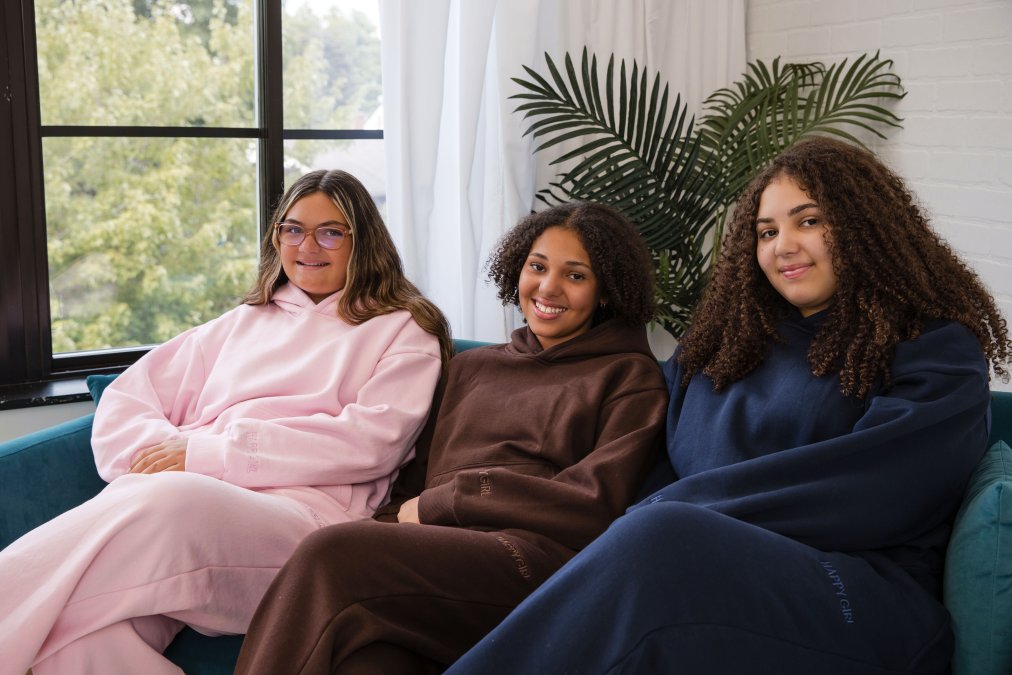
Here is the part most guides skip: the rule is not about owning less for its own sake. It is about forcing every piece to earn its spot.
The 3-3-3 rule is a minimalist styling method that caps a capsule at nine core pieces so each item mixes with the rest. It suits busy professionals, frequent travelers, and anyone who wants an effortlessly put-together look without a daily decision spiral.
Below, we break down the nine pieces, the real outfit math, and how to pick items that fit your life.
The Nine Pieces: Three Tops, Three Bottoms, Three Pairs of Shoes
The count is simple: three tops, three bottoms, three pairs of shoes. That is nine items total, and every outfit you build pulls one from each group.
- Tops: tees, sweatshirts, button-downs, or a zip-up hoodie
- Bottoms: sweatpants, joggers, jeans, or tailored trousers
- Shoes: sneakers, loafers, or boots
Accessories, layers, and outerwear sit outside the nine. A jacket or a tote does not count against your total, which is why the rule stays livable in cold weather.
The Outfit-Count Math: How 9 Pieces Create 27 Outfits
Nine pieces create 27 outfit combinations, because 3 tops × 3 bottoms × 3 pairs of shoes = 27. Each top pairs with each bottom and each pair of shoes exactly once.
That is the number most articles get fuzzy about. Some claim 27, others say nine or "dozens." The math is not a debate.
| Category | Pieces | Pairs With | Combinations |
|---|---|---|---|
| Tops × Bottoms | 3 × 3 | Each other | 9 top-and-bottom pairs |
| Those 9 × Shoes | 9 × 3 | Each pair of shoes | 27 full outfits |
Add a single layer, like an open hoodie, and the count climbs again. That is why a small, well-chosen set of versatile pieces beats a closet full of one-off buys.
A Step-by-Step Process to Choose Your Pieces
Choosing your nine pieces works best in a fixed order: shop your own closet first, lock a color palette, then fill only the gaps. Follow these steps and you will avoid the common mistake of buying before you sort.
- Pull every candidate. Lay out tops, bottoms, and shoes you already love wearing. Aim for six to nine candidates per category so you have room to cut.
- Cut the maybes. If a piece needs a specific bra, belt, or mood to work, it is out. The test is whether you would grab it on a rushed morning without thinking.
- Run the compatibility grid. Draw a three-by-three grid on paper or in a notes app. Put your three top candidates down the side and your three bottom candidates across the top, then mark each of the nine cells as a yes, a maybe, or a no. A top that scores two or more noes is out; a bottom that scores two or more noes is out. Replace and rerun until every cell is at least a maybe.
- Lock three shoes against the grid. Pick one casual pair, one clean everyday pair, and one that dresses things up. Check each pair against all nine top-and-bottom pairs, not just your favorite outfit. If a shoe only works with one look, it is not earning its slot.
- Fill the gaps last. Buy only what the grid is missing, not what looks good on a hanger. If you have three great tops but only two bottoms that work, the gap is a bottom, not another top.
- Do a five-day dry run. Wear only the nine pieces for five days before you commit. Note which combinations you reached for and which felt forced. Swap one piece if a category is clearly lagging.
Watch out: the most common failure is choosing three tops you love individually that share the same silhouette, so every outfit reads the same. Vary the shapes, not just the colors.
Start With What You Already Own
Most people already own six or seven of the nine pieces. Before you spend anything, sort your closet into three piles: wear often, wear rarely, and never. The "wear often" pile is your starting lineup.
Build a Cohesive Color Palette
A tight color palette is what makes nine pieces feel like thirty. Pick two neutrals and one accent, then make sure every top, bottom, and shoe falls inside that range.
- Neutrals: black, cream, gray, navy, or a deep wine tone
- Accent: one color you love, used sparingly
- Rule of thumb: every piece should pair with at least two others without thought
When your palette is set, mixing and matching becomes automatic. You stop asking "does this go?" and start grabbing outfits in seconds.
Troubleshooting a Set That Is Not Working
If the grid keeps failing, the problem is usually one of four things, and each has a fix.
- Mismatched colors: you have more than one accent competing. Cut back to a single accent and let the neutrals carry the rest.
- Shoes that only work with one look: swap the odd pair for a neutral that reads casual and polished at once, like a clean low sneaker or a simple loafer.
- Repetitive outfits: your tops share a silhouette. Replace one with a different neckline or sleeve length so the same bottoms read differently.
For a broader walkthrough of assembling a cohesive set, see our guide on how to build your happy girl wardrobe.
The 3-3-3 Outfit Challenge: Get Creative With Personal Style
The 3-3-3 outfit challenge turns the formula into a game: wear only your nine pieces for a set stretch, then see how many looks you can create. It is the same idea as a styling challenge, minus the pressure of a full month.
The fun comes from constraints. With fewer choices, you experiment more. Roll cuffs, knot a tee, add a belt, or swap a layer, and the same nine pieces read differently.
If you are working with roomy silhouettes, our tips on how to style oversized matching sets show how to keep the look intentional rather than shapeless.
The 3-3-3 Capsule Wardrobe: Fewer Clothes, More Outfits
A 3-3-3 capsule wardrobe is the minimalist version of the rule: a tiny, hard-working set of clothing that covers your week. The goal is fewer clothes and more outfits, not deprivation.
This is where the method pays off. A smaller capsule means faster mornings, less laundry guessing, and a closet where everything fits and flatters.
One honest limitation: a nine-piece capsule will not cover every occasion on its own.
The 3-3-3 Rule for Packing Clothes: A Travel-Ready Formula
The 3-3-3 rule for packing clothes applies the same math to a suitcase: three tops, three bottoms, three pairs of shoes, and you have a week of outfits in a carry-on. It is the same formula, just aimed at travel.
Travel is where the method shines. Nine pieces pack flat, mix endlessly, and still look put together at the airport or the hotel lobby. Choose fabrics that resist wrinkles and pieces that layer.
For more outfit ideas built around comfort on the move, browse our guide to comfortable travel outfits for women.
Adapt the 3-3-3 Rule for Real Life: Weather, Occasions, and Fit
Real life is messier than a formula, so adapt the rule to weather, occasions, and your own fit needs. The nine-piece count is a starting point, not a law. The trick is to keep the core nine stable and treat everything else as a flexible outer ring.
Build the Core Nine Around Your Actual Week
Before you choose pieces, count how you really spend your days. A common pattern is five workdays, one casual weekend day, and one evening out. Match the nine to that split rather than to an imaginary perfect wardrobe.
- Mostly office: two polished bottoms, one casual bottom; two structured tops, one knit; one loafer, one low sneaker, one boot.
- Mostly casual or remote: two casual bottoms, one polished bottom; two knits, one button-down; two sneakers, one dressier shoe.
- Frequent travel: choose wrinkle-resistant fabrics and pieces that layer, and favor shoes you can walk in for hours.
Weather and Climate
Outerwear, layers, and accessories sit outside the nine, which is what keeps the rule livable in cold weather. Add a coat, a scarf, and a cardigan without touching your core count.
- Cold weather: add a coat and a mid-layer outside the nine; choose one boot that handles wet pavement.
- Warm weather: swap the boot for a sandal or a breathable sneaker, and favor lighter fabrics in the tops.
- Shoulder seasons: a single open layer, like a zip-up hoodie, adds a third look to many of your nine combinations without changing the count.
Work, Weekends, and Dress Codes
A nine-piece set cannot cover a formal event on its own, and it does not need to. Keep one dressier top or one polished shoe in reserve for nights out and client meetings, and treat it as an extra rather than a core piece.
- Business casual: one tailored bottom and one button-down anchor the workweek.
- Weekends: the casual bottom and casual shoe carry Saturday and Sunday.
- Evening: a dressier shoe or a reserved top upgrades a daytime combination in seconds.
Fit, Body Shape, and Mobility
Fit matters most. An oversized piece should drape with intent, not swallow you. Check the shoulder seam and sleeve length first, then the rise on your bottoms.
- Different body shapes: choose bottoms with a rise that sits where you want the waistline, and tops that hit at a length you can tuck or leave out.
- Mobility needs: favor pull-on waists, stretch fabrics, and shoes with secure closures over laces you have to retie.
- Gender expression: the rule is not gendered. Three tops, three bottoms, and three shoes work the same whether the pieces are tailored, relaxed, or somewhere in between.
If you want to dress up casual pieces, our guide on how to look polished in sweatpants walks through the details that make the difference.
Shop Your Nine Pieces at Happy Girl Edit & Co.
Building your nine pieces is easier when the core set already matches. Matching sets give you a top and bottom that work together from day one.
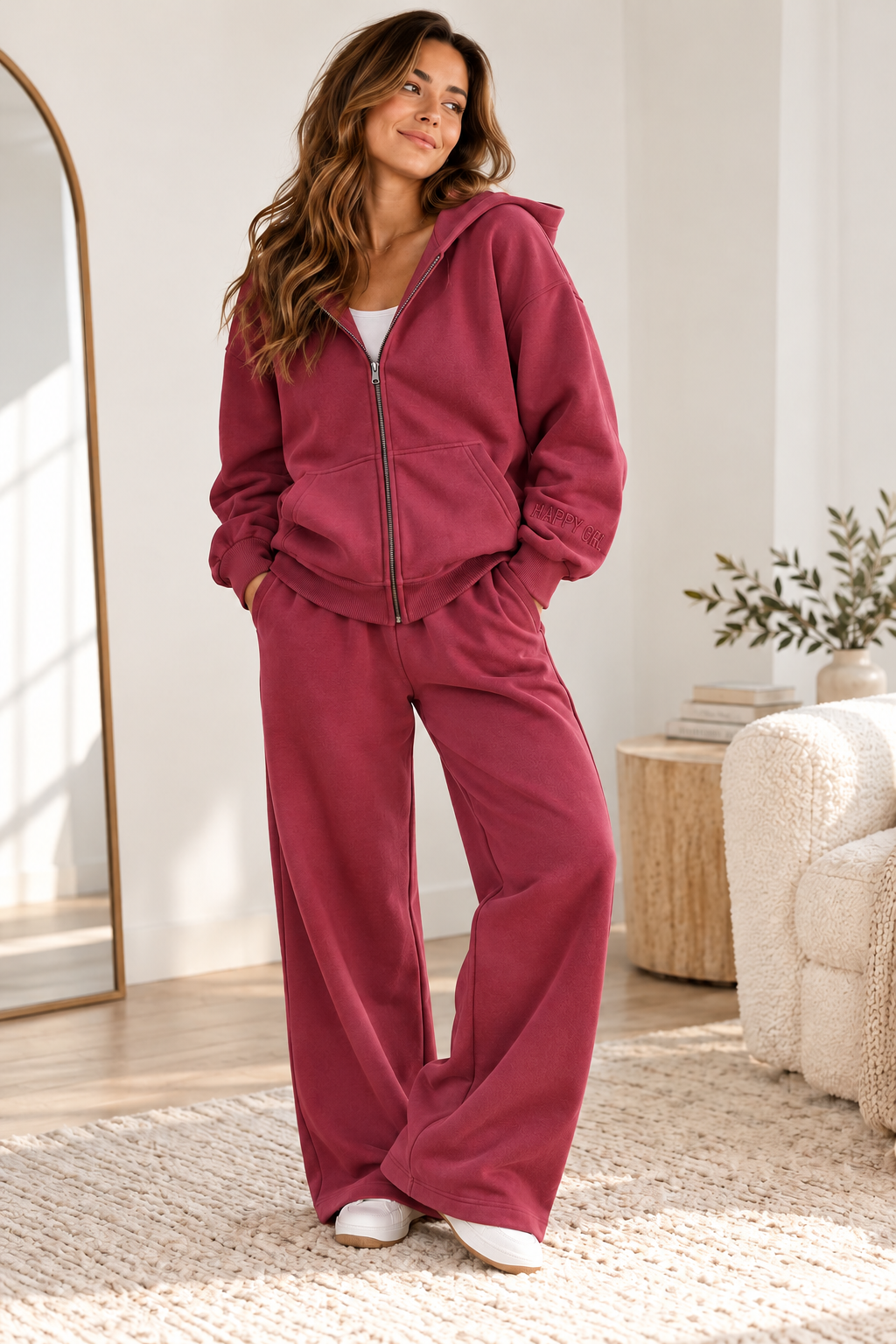
Our Mulberry Wine zip-up hoodie and sweatpants set is a strong anchor: a relaxed oversized fit, premium heavyweight 80/20 cotton blend fleece, and an ultra-soft brushed interior.
Prefer a pullover? The pullover hoodie and sweatpants set adds a kangaroo pocket and the same soft fleece. For something a little elevated, the off-the-shoulder sweatshirt set drapes for a laid-back look you can wear out.
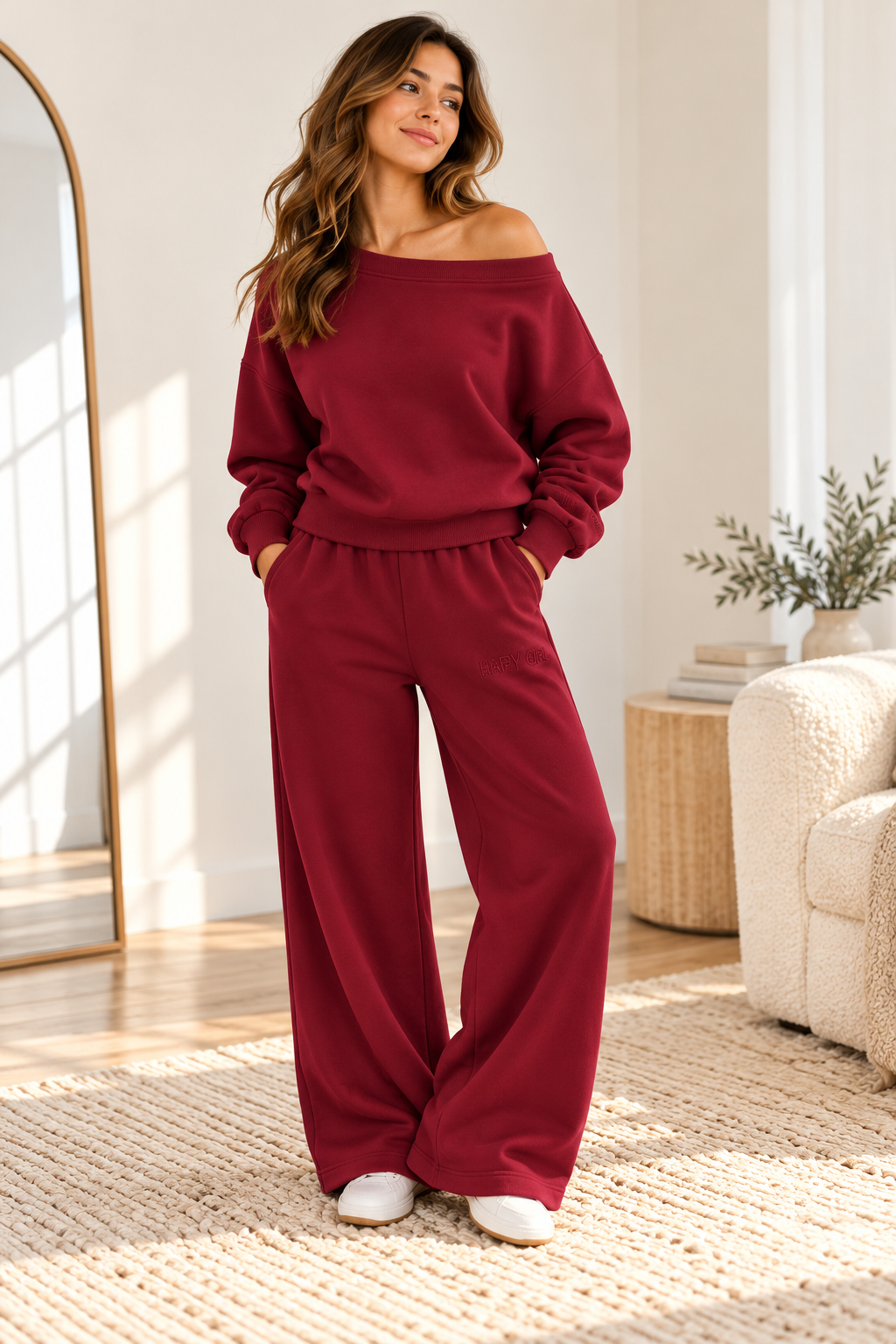
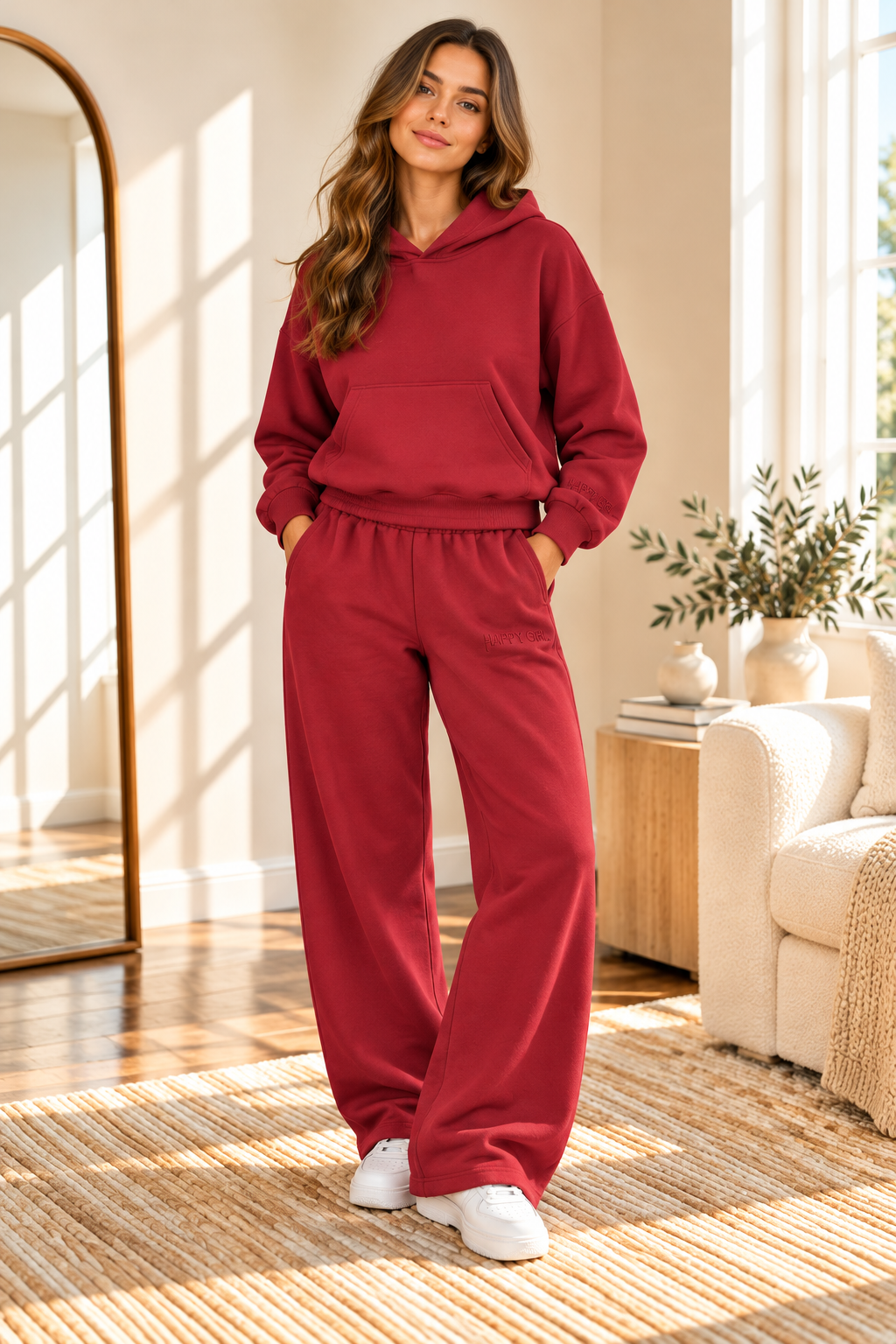
Each set is $99.00. Browse all of our Happy Girl sets to build your nine pieces in one place.
Building a nine-piece wardrobe asks you to be honest about what you actually wear, and that is harder than it sounds.
Frequently Asked Questions
How many outfits can you make with the 3-3-3 rule?
The math is simple: three tops times three bottoms times three pairs of shoes equals 27 possible outfit combinations. That count assumes every top works with every bottom and every pair of shoes, which is why choosing a cohesive color palette matters. If one top only works with one bottom, your real number drops. Build around two or three colors that all coordinate, and you can realistically wear most of the 27 combinations.
What is the difference between the 3-3-3 rule and a capsule wardrobe?
A 3-3-3 capsule wardrobe is a small, focused version of a capsule wardrobe. A traditional capsule might hold 30 to 40 pieces for a season, while the 3-3-3 rule limits you to nine core pieces: three tops, three bottoms, and three pairs of shoes. Think of it as a starter capsule or a travel capsule. You can add accessories, layers, and outerwear on top of the nine pieces without breaking the formula.
Can you use the 3-3-3 rule for packing clothes?
Yes, and it is one of the most practical ways to pack. Choose three tops, three bottoms, and three pairs of shoes that all mix together, and you have 27 outfit options in a carry-on. Pick fabrics that resist wrinkles, stick to a two- or three-color palette, and wear your bulkiest shoes on the plane. The 3-3-3 rule for packing clothes works best for trips of four to seven days where you want variety without overpacking.
How do you choose clothes for a 3-3-3 outfit challenge?
Start with pieces you already wear often, then fill gaps. Pick three tops in colors that flatter you, three bottoms in neutral or coordinating shades, and three pairs of shoes that cover different occasions, such as sneakers, flats, and boots. Try every combination before you commit. If a piece only works one way, swap it out. The 3-3-3 outfit challenge is about getting creative with personal style, so choose items you genuinely enjoy wearing.


