


Table of Contents
- Understanding Oversized vs. Baggy Clothes
- Why Oversized Fits Look Baggy
- How an Oversized Sweatshirt Should Fit
- How to Style Oversized Clothes for Balance
- Oversized Sweatshirt Outfit Ideas
- The Fit-Check Guide: Intentional vs. Too Large
- Frequently Asked Questions
Last Updated: October 21, 2026
Understanding Oversized vs. Baggy Clothes
Oversized clothing is deliberately cut larger than your typical size. Baggy clothes simply don't fit properly, draping without shape or structure. One is intentional style; the other is poor fit.
At Happy Girl Edit & Co., we design relaxed, oversized fits that sit intentionally on your frame. Our silhouettes are cut to fall at specific points: shoulders align properly, the hem hits at a flattering length, and the proportions create a cohesive look rather than appearing shapeless.

People confuse the two because both involve extra fabric, but oversized fit is strategic and baggy fit is accidental. Truly oversized enhances your silhouette; baggy overwhelms it.
Why Oversized Fits Look Baggy
Oversized fits look baggy when the extra volume has nothing to anchor it. Four checkable causes drive this: seam placement, fabric behavior, volume distribution, and how the piece interacts with everything else you're wearing.
Cause 1: The Shoulder Seam Is the Anchor Point
The single biggest tell between intentional oversized and simply too large is the shoulder seam. On a properly cut oversized top, the seam sits at your natural shoulder point or drops no more than about an inch past it. Once it slides further down the arm, the sleeve cap no longer supports the torso, and the whole garment collapses into a bag shape.
That's why two sweatshirts in the same size can look completely different on one person. One has a dropped shoulder engineered into the pattern; the other is a larger size scaled up without adjusting the armhole, landing the seam mid-bicep. No styling fixes that.
Cause 2: Fabric Weight and Drape
Drape is how a fabric falls under its own weight. Two fabrics can have identical measurements and produce completely different silhouettes:
- Lightweight, loose-weave cotton (under roughly 5 oz per square yard) collapses into itself. It wrinkles at the elbow, bunches at the hem, and reads as a rumpled, slept-in shirt rather than a designed oversized piece.
- Mid-to-heavyweight fleece and French terry (roughly 8-12 oz per square yard) holds a column shape. The volume stays where the pattern put it instead of pooling at your waist.
- Stiff, heavily sized fabric creates the opposite problem: it stands away from the body like a box and looks costume-like rather than relaxed.
The sweet spot is fabric heavy enough to hold structure but soft enough to move, which is why an 80/20 cotton-poly fleece reads as intentional while a thin 100% cotton jersey in the same cut reads as baggy.
Cause 3: Volume Distribution
Baggy usually means volume is in the wrong place. A well-cut oversized garment concentrates ease at the chest and body while keeping the armhole, neckline, and cuff close to the body. A poorly cut one spreads ease evenly, so the neckline gapes, cuffs hang past the wrist, and the hem flares.
Run this check on any oversized top: pinch the fabric at the side seam under your arm. If you can pull more than about 4 inches of slack, the body is cut generously, which is fine. Now pinch at the cuff.
Cause 4: Proportion Interaction
Oversized volume is relative: the same sweatshirt that looks intentional on a 5'10" frame can swallow a 5'2" frame because the hem lands at a different point on the leg. Most stylists' rule: the hem should land between the hip bone and mid-thigh, and the garment's widest point should not sit at the widest point of your body. When those lines coincide, the silhouette reads bulky rather than relaxed.
How an Oversized Sweatshirt Should Fit
A properly fitting oversized sweatshirt has specific placement points that reveal whether a piece is intentionally oversized or just too large.
Shoulder and Sleeve Length
The shoulder seam should sit at or slightly past your natural shoulder point, not drooping down your arm. If the seam falls more than an inch past your shoulder, the piece is likely too large rather than intentionally oversized.
Sleeves should hit at your wrist bone or no more than a half-inch past it; oversized doesn't mean sleeves that swallow your hands. When shoulders and sleeves are properly placed, the rest of the garment can be loose without looking sloppy, because the anchor points create structure for the volume.
Torso Length and Hem Placement
The hem should hit between your hip and mid-thigh. Hip length creates a cropped, balanced look; mid-thigh works for taller frames or with fitted bottoms. A sweatshirt that's too long visually shortens your legs, while the right length complements your proportions and makes the oversized volume read as intentional rather than excessive.
How to Style Oversized Clothes for Balance
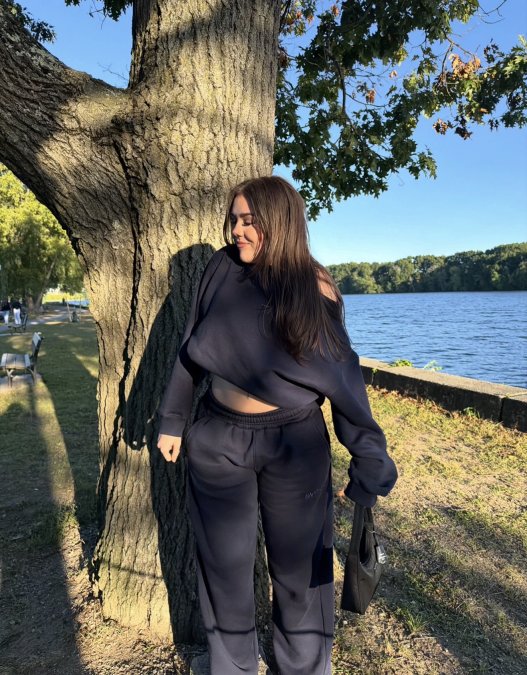
Most styling advice stops at "pair loose with fitted." That rule is correct but incomplete: it doesn't address when the garment itself is the problem, or how the answer changes with your height and proportions. Here's the garment-by-garment version.
The Balance Rule, Stated Precisely
Visual balance comes from contrast in volume, not tightness. A fitted bottom works because it's narrow relative to the top, not because it's tight.
The practical test: stand in front of a mirror and look at the outline of your outfit. If the widest point is the top, you have balance. If the top and bottom are equally wide, you have a rectangle. If the bottom is wider, you have a wedge. Only the first reads as intentional.
Troubleshooting by Garment Type
Oversized sweatshirts and hoodies. Easiest to style because the fabric usually holds shape; the failure mode is length.
Oversized button-down shirts. These look baggy more often than any other category because shirting fabric is usually lightweight.
Oversized jackets and coats. A jacket reads as intentional when the shoulder is structured even if the body is loose, so look for a defined seam or lightly padded shoulder.
Oversized trousers. These are the hardest category because there is no top to anchor them.
Women's Oversized Pullover Hoodie – Cream →
Oversized dresses. A loose dress needs one point of definition: the waist (belt), the shoulder (structured neckline), or the hem (straight or slightly tapered rather than an ever-expanding A-line).
Styling by Height and Proportion
Petite frames (roughly under 5'4"). The main risk is length, not width. Keep oversized tops at hip length or shorter, or tuck them, and avoid pieces that hit at the widest part of the calf.
Tall frames (roughly over 5'9"). You have more room to run long. Mid-thigh hems and longline coats work well. The risk is looking columnar, so add a horizontal break somewhere, a cropped layer, a belt, or a contrasting shoe.
Curvier frames. The goal is to avoid the widest point of the garment landing at the widest point of the body.
Broad shoulders. A dropped shoulder seam can exaggerate width.
Layering and Dimension
Layering breaks up large expanses of fabric and creates edges the eye reads as structure. A fitted long-sleeve tee under an oversized sweatshirt adds a visible neckline and cuff that frame the loose volume, and a structured bag or belt adds a hard line against soft fabric, which is why the same outfit looks more polished with a crossbody bag.
Oversized Sweatshirt Outfit Ideas
Travel and Airport Looks
Oversized pieces are ideal for travel: comfortable without sacrificing style. Pair an oversized crewneck or hoodie with fitted black leggings, clean sneakers, and a structured crossbody bag for polish.
The Women's Oversized Pullover Hoodie in Cream works perfectly here. The premium fleece interior keeps you comfortable on flights while the oversized fit feels intentional rather than sloppy. Layer with a long cardigan or blazer for extra polish; the fitted layers underneath anchor the look.

Casual Errands and At-Home Style
For errands or relaxing at home, pair an oversized sweatshirt with fitted bottoms and simple sneakers: zero effort, but intentional-looking.
Our CLASSIC CREWNECK in Cream pairs beautifully with the SWEATPANTS in Cream for a coordinated set that feels elevated rather than like loungewear. The premium 80/20 fabric holds its shape and drapes intentionally all day. Add a structured belt or tuck the front slightly for subtle waist definition.
The Fit-Check Guide: Intentional vs. Too Large
Use this practical guide to determine whether an oversized piece is intentionally designed or simply too large:
Check the shoulder seams. They should align with or sit just past your natural shoulder point. Dropping more than an inch below means the piece is too large.
Look at sleeve length. Your hands should be visible; sleeves covering your knuckles are oversized beyond intention.
Assess the hem placement. It should hit between your hip and mid-thigh. Anything significantly lower is likely too large for your frame.
Evaluate the fabric weight. Quality oversized pieces hold structure; poor-quality ones look baggy because the fabric lacks weight.
Consider the overall silhouette. Do you see intentional proportions or just excess fabric? Intentional oversized fit creates visual interest; too-large fit overwhelms.
Test with fitted bottoms. If the contrast creates visual balance, the piece is intentionally oversized.
Styling oversized clothing comes down to understanding the difference between intentional design and poor fit.
At Happy Girl Edit & Co., we design oversized pieces with these principles built in. Our Women's Oversized Zip-Up Hoodie in Cream uses premium heavyweight 80/20 cotton blend fleece because the weight gives oversized silhouettes intention and polish.

Frequently Asked Questions
Are baggy clothes the same as oversized clothes?
No. Oversized clothes are intentionally designed with extra volume in a structured way, think a relaxed fit with purpose. Baggy clothes lack that intentionality and often feel shapeless or sloppy. The difference comes down to fit, fabric quality, and how pieces are styled. Oversized pieces from brands like Happy Girl Edit & Co. use premium 80/20 fabric and thoughtful construction to maintain a polished silhouette, while truly baggy clothes simply don't fit your frame well.
How should an oversized sweatshirt fit to avoid looking baggy?
A well-fitting oversized sweatshirt should sit at or slightly past your hip bone, with sleeves ending at your wrist when arms are relaxed. The shoulders should align with your natural shoulder line, not hang too far past it. The fabric should drape with intention rather than bunch up. Premium pieces with structure, like those crafted from heavyweight 80/20 cotton blend fleece, hold their shape better than lighter fabrics. If the hem hits mid-thigh and creates a tent-like silhouette, it's too large, not intentionally oversized.
How can you wear oversized clothes without looking bigger?
Balance volume by pairing oversized tops with fitted bottoms like slim-fitting leggings or tapered pants. This creates visual proportion and prevents the outfit from looking shapeless. Layer strategically to add dimension, a fitted tee under an oversized hoodie creates movement without bulk. Choose fabrics with enough structure to hold their shape; lightweight materials tend to cling and emphasize volume in unflattering ways. Finally, ensure the garment length hits at a strategic point, usually hip or slightly below, rather than draping past your thighs, which can add perceived size.
What's the difference between intentional oversized fit and clothes that are simply too big?
Intentional oversized pieces maintain structure and proportion. Shoulders align with your frame, sleeves end at your wrist, and the hem has a purpose, usually hitting at hip or mid-thigh. Too-big clothes sag at the shoulders, have excess fabric bunching at the seams, and create an unbalanced silhouette. Quality matters: premium fabrics with brushed interiors and proper weight hold their shape, while cheap materials go limp and shapeless. Happy Girl Edit & Co.'s oversized pieces are designed with precision so the fit flatters rather than overwhelms.


